


Letter from the CEO
Dear friends and partners, Over the past decade, school leadership has moved from the margins of global education debates to being recognized as a critical lever for systemic transformation. More governments, funders, and implementing organizations are asking how investing in school leaders can meaningfully contribute to better teaching, stronger programs, and improved student outcomes. Global School Leaders has been dedicated to answering this question with care and rigor. Together with governments, NGOs, and research partners, we have tested different approaches to strengthening school leadership across diverse contexts in the Global South and followed these efforts closely over time. In 2025, we concluded and synthesized a set of long-term and experimental studies that mark an important milestone in our research journey. As we prepare to share detailed reports and analysis of each of these studies throughout 2026, we are excited to highlight key learnings that are beginning to emerge. First, well-designed school leadership training can improve student outcomes. Across contexts, our studies show that leadership support strengthens instructional practices, improves classroom engagement, and leads to measurable gains for students — including improvements in learning, school climate, and students’ sense of belonging. Importantly, these benefits can be achieved at a fraction of the cost of reaching every teacher individually. Second, school leaders play a critical role in implementation quality. Many promising education interventions struggle not because the ideas are weak, but because execution breaks down at the last mile — when programs reach the school level. Our research shows that when school leaders are intentionally engaged — observing classrooms, coaching teachers, and reinforcing core routines — programs are implemented more faithfully and are more likely to take root. In practice, this means school leaders act as force multipliers for other investments. Finally, the evidence is equally clear that impact is not automatic. Program content, delivery methods, and system conditions all matter. Leadership support works best when it is sustained over time, grounded in practical tools, supported through coaching or peer learning, and embedded in systems that protect leaders’ time for instructional work. Taken together, these findings reinforce a simple but powerful idea: strengthening school leadership should increasingly be treated as a core pillar of any serious effort to improve learning at scale. For us at GSL, these lessons are not just research insights — they are shaping how we work. Alongside our partners, we are focusing our efforts on strengthening professional development for school leaders and improving the broader conditions that allow them to succeed. This includes generating and sharing evidence and practical tools, supporting coalitions that bring stakeholders together around school leadership, and providing technical support to organizations and systems working to strengthen leadership policies and practice. This report reflects that journey. It brings together the evidence we are generating, the networks we are building, and the work our partners are doing across regions to translate these learnings into action. I am deeply proud of the Global School Leaders team for the quality and commitment they brought to this work throughout the year, and deeply grateful to the partners, researchers, funders, and school leaders who continue to shape this effort with us. Our conviction remains simple: excellent schools begin with excellent leaders. We remain committed to our vision that students across Latin America, Africa, and Asia can count on strong school leadership to expand their opportunities to learn and thrive. Thank you for walking this path with us — for your trust, your partnership, and your belief in the role school leaders play in shaping better opportunities for children and communities.

Camila Pereira
CEO, Global School Leaders
2025 in Numbers
Cultivating a Global Field
In 2025, we expanded our focus from training to cultivate the field of school leadership. Through our previous work, we learnt that real systems change requires tilling the soil of policy, planting the seeds of rigorous evidence, and nurturing the roots of deep partnership. In 2025, we dedicated ourselves to this essential groundwork — preparing a fertile ecosystem where effective school leadership can take hold and thrive.
This report outlines how we cultivated the field in 2025 to support the growth of leaders everywhere.
KEY MILESTONES

Synthesis of Actionable Evidence
Concluded five major multi-year research projects (including RCTs in India and Indonesia) that provide rigorous proof that school leadership training directly improves student learning outcomes and school climate.
Regional Hub Expansion
Successfully launched the Southeast Asia (SEA) School Leadership Hub in partnership with SEAMEO and transitioned the Latin America and Caribbean (LAC) Hub into its full implementation phase.
Expanding the Knowledge Ecosystem
Opened a public Resource Portal now hosting over 400 open-source tools, with 213 organizations from 35 countries registered to use these evidence-based best practices.
Our Global Reach
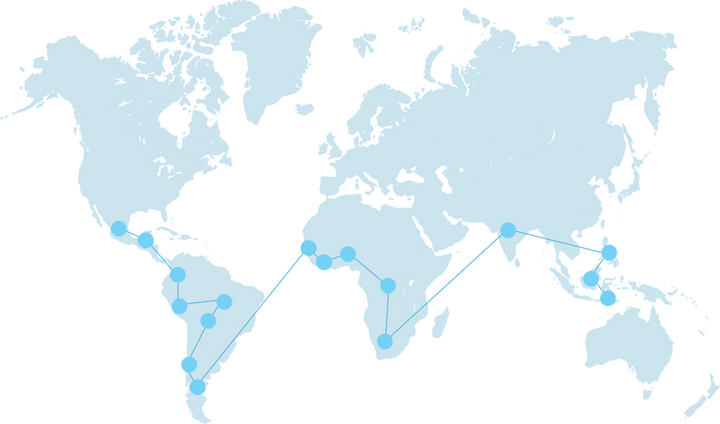
37 Partners across 17 Countries
Targeted Leadership Coalitions
Established the Gender-Equitable Schools Alliance in Ghana and Kenya and graduated the first cohort of SheLeads, a fellowship specifically designed to empower women in school leadership roles.
Policy & System Influence
Bridged the gap between data and practice by co-convening the School Leadership Matters Summit with UNESCO, reaching over 1,000 participants from 78 countries to set a global agenda for school leadership policy.
Our work - has these essential and interconnected layers: the Seeds of research and knowledge,
the Roots of partnership, and
the Branches of implementation
Training & Consultancy
The reach and the shelter
Finally, the tree extends outward. Through Training and Strategic Consultancy, we branch out to touch school leaders and government systems in partnership with local organizations, offering the support necessary for schools to thrive.
The Branches
Resources, Tools, & Evidence The DNA of change.
The Seeds
Concluded five major multi-year research projects (including RCTs in India and Indonesia) that provide rigorous proof that school leadership training directly improves student learning outcomes and school climate.
Coalition Building & Networks
The anchor and source of sustenance
The Roots
A tree cannot survive without a strong root system. Our Coalitions and Networks connect isolated efforts into a unified underground web of partners and funders, drawing on local wisdom to provide the stability needed for systemic resilience.
This report outlines how we have cultivated the field in 2025 to support the growth of school leaders everywhere.
Seeds
Knowledge, Resources, Tools and Evidence
Just as every harvest begins with a single seed, our impact begins with the core elements of knowledge and rigorous evidence. This year, we focused on analyzing high-quality data and generating actionable tools necessary to prove that school leadership is a critical lever for change.
Actionable Evidence and Proof Points
The year 2025 marked the harvest of insights from five major multi-year research projects in diverse contexts like India, Indonesia, and Sierra Leone, and we have sought to answer four recurring and essential questions that define the future of the field:
We approach our research projects from an evidence-based and contextual lens, focused on generating a knowledge repository for the Global South through continuous learning, collaboration, and open sharing of findings to drive systemic change in school leadership.


A coherent picture is emerging from our studies
School leaders sit at the intersection of policy and practice.
Our findings reinforce that school leadership should not replace other education investments but should be treated as a core pillar for any serious strategy to improve learning at scale. By synthesizing evidence from RCTs in India and Indonesia, alongside A/B testing in Sierra Leone, we are moving from isolated results toward a clear understanding of what professionalizing school leadership makes possible. These studies offer concrete proof of how school leadership drives student outcomes and what conditions are needed for school leader support programs to be most effective.
SPOTLIGHT
Lead FLN is a guide to
FLN-focused instructional leadership
Lead FLN is a guide to FLN-focused instructional leadership
.png)
It draws on the latest evidence on FLN and effective teaching practices, and insights and good practices on lesson observation, feedback, and teacher collaboration and peer learning. In 2025, we implemented Lead FLN in collaboration with EducAid and National Youth Awareness Forum (NYAF) in Sierra Leone. Our research focus in LeadFLN was to Pilot Lead FLN content in a low-resource context and understand implementation effectiveness and uptake
Highlights from the research:
High Engagement and Feasibility
The pilot in Sierra Leone demonstrated exceptionally high uptake, with a blended learning model (using video modules) proving to be a highly effective and time-efficient alternative to traditional in-person workshops.
Improved Leadership Practices
School leaders in the program showed significant improvement in supporting their staff, specifically by creating more time for teachers to reflect on their instruction and using lesson observations to help teachers develop effective FLN practices.
Strengthened Teaching and Learning
The intervention led to more frequent use of FLN assessment data by teachers to set student goals, and preliminary results indicate that students in the video-based program showed a clearer pattern of higher gains in numeracy and literacy.
SPOTLIGHT
Gender Equitable School Leadership

A question that sometimes comes up in conversations on gender equity is whether gender should be addressed as a specific equity issue or tackled as part of many other inequities people face, such as poverty, caste, disability, religion or language. In 2025, we tested two school leadership development approaches across 155 government secondary schools in Telangana, India: one that explicitly focused on gender equity, and another that embedded gender within a broader equity framework. Our research aimed to understand which approach generated stronger engagement and clearer shifts in school leader and teacher practices, and student experiences.
Highlights from the research:
Stronger Engagement with Clear Focus
School leaders in the gender-focused programme attended more workshops, engaged more consistently in coaching, and reported higher satisfaction compared to those in the broader equity programme.
Clearer Shifts in Practice
When gender was the explicit focus, school leaders found the content easier to grasp and apply to daily challenges - such as student dropouts, confidence gaps in students’ participation. They adopted practices such as more frequent classroom observations and structured discussions with teachers on equitable participation and safety.
Improved Student Experience
Students in gender-focused schools were more likely to report equal participation of girls and boys in class and greater confidence in speaking up, and improvements in overall sense of belonging, particularly for girls.

Key Learnings
Explicitly focusing on gender can strengthen leadership engagement and accelerate action.
Starting with practical, actionable “quick wins” increases uptake and credibility.
While gender is interconnected with broader systemic inequalities, clarity of focus at the school level makes change more feasible and sustainable.
Gender equity can be aligned with what school leaders already prioritize, for example, student participation, safety, and school culture.
Global Trends from 2025 PULS Survey
Beyond our multi-year longitudinal studies, GSL has conducted the Promoting Understanding of Leadership in Schools (PULS) Survey since 2020. PULS provides policy- and decision-makers with a direct line to the "on-the-ground" reality of school leadership in low- and middle-income countries.
In 2025, the survey focused on Foundational Literacy and Numeracy (FLN). While we continue to analyze local contexts, initial data from 12,453 school leaders across 16 countries in Global South has revealed four critical emerging trends:

The Commitment-Capacity Gap
While school leaders almost universally prioritize FLN, there is a significant gap between believing in its importance and having the specific support needed to drive instructional improvements.

Data as an Untapped Lever
Leaders identify a critical need for targeted training on how to translate school-level data into informed, everyday pedagogical decisions.

The Balancing Act
Successful FLN implementation requires a delicate mix of administrative oversight and instructional coaching; currently, many leaders struggle to balance these competing demands, with administrative load taking over on most occasions.

Community-Led Literacy
Engaging families and local communities is emerging as a powerful, yet underutilized, lever for accelerating foundational learning outcomes.
The full PULS 2025 Global Report will be released in late 2026.
Resources and Tools
GSL believes that high-quality evidence-based best practices and tools for school leadership should be public goods. To aid partners and organizations worldwide, we have made our entire repository of resources open-source and free to access. This year, we prioritized tools addressing Foundational Literacy and Numeracy (FLN), gender equity, and women in leadership.
1.
The GSL Resource Portal: Global Reach
In 2025, we opened access to our full library through the launch of the GSL Resource Portal, a curated collection of 400+ evidence-based tools, including session plans, research, and case studies, designed to strengthen school leadership. These resources are built for adaptability across any educational context.
180 individuals from 150 organizations across 36 countries have registered and accessed the platform.
The majority of users are practitioners in key leadership roles, primarily leading an organization (CEOs/Directors) or leading training (Program/Training Managers).
63% of users represent Non-Profits and Social Enterprises, ensuring these tools reach the communities that need them most.
Portal in Action
Enseñá por Argentina is a national organization committed to educational equity and transformation by supporting teacher leadership and institutional change. For their Conectá x Argentina program—which brings satellite internet and training to 33 schools—they utilized the GSL Portal and co-designed contextualized training sessions with GSL. By adapting our materials, they are strengthening school leaders' capacity to integrate technology and foster inclusive learning environments.

2.
Gender Guidebook: Brave Leadership, Safe Schools
Practical resource addressing five critical dimensions of gender-equitable leadership in schools:
Guidebook in Action:
ConnectEd is an organization that partners with rural school leaders across Guatemala to drive meaningful change in their communities. In 2025, we supported ConnectEd in developing their new gender-focused curriculum. Using our resources, Brave Leadership, Safe Schools, we collaborated to design a series of trainings for their fellows—created with and by the fellows themselves. The guides and the stories included in the resource set allowed them to incorporate easy and practical activities, while ensuring these could be adapted to their specific context.
3. The Storybook
This storybook features the voices of 10 school leaders—both men and women—from Asia, Latin America, and Africa. Through powerful, real-life accounts, these leaders share how they’ve advanced gender equity in their schools, detailing the strategies they used and the impact they’ve made in their communities. We also hosted an in-person launch event in Lima, Peru, in collaboration with Heroínas Peruanas, our partner in the storybook’s development and editing.
4. Lead FLN portal
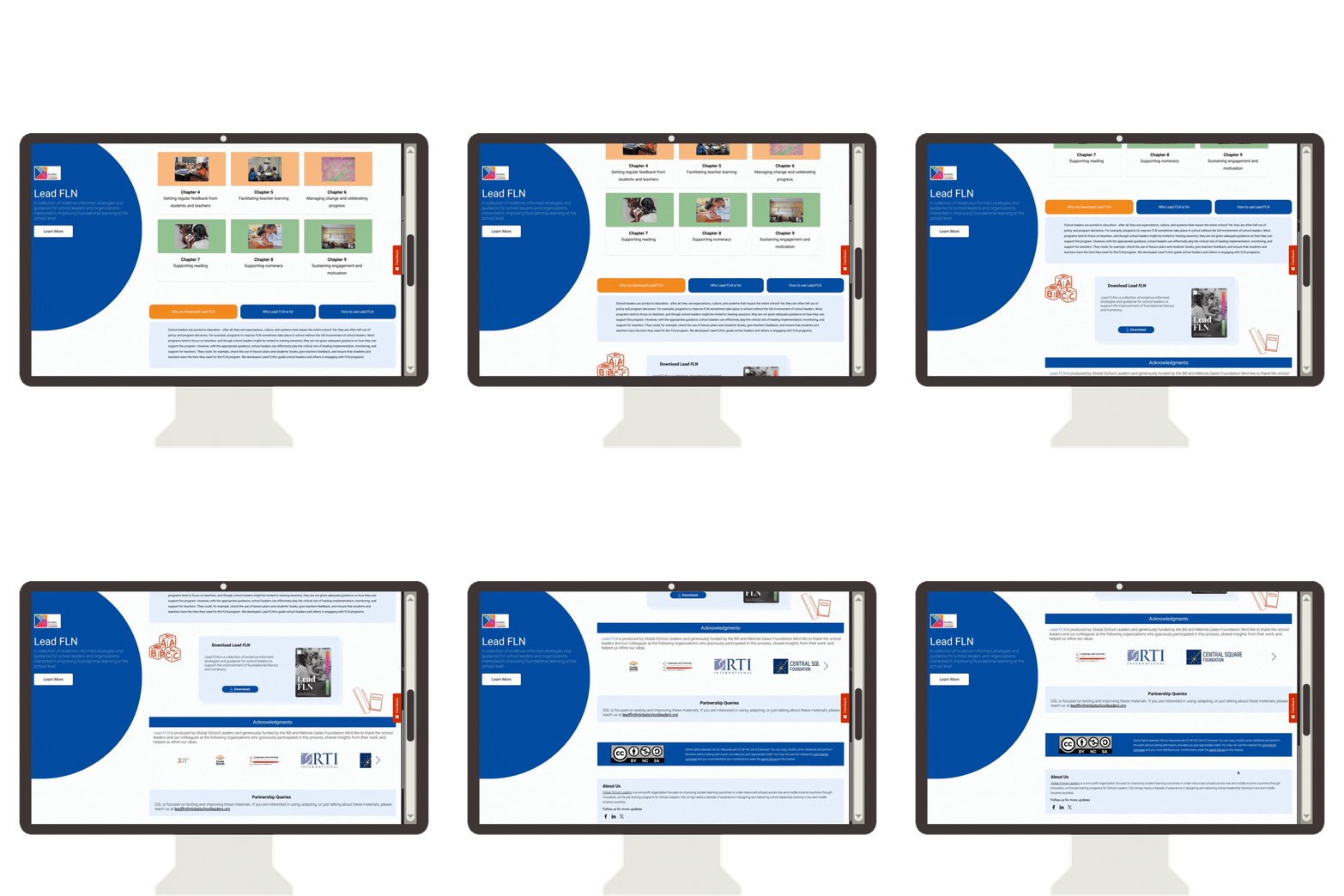
The Lead FLN Portal hosts a suite of instructional leadership resources, including a comprehensive Guidebook, instructional videos, and a literature review on foundational learning. In 2025, we piloted Lead FLN in Sierra Leone with EducAid and NYAF to evaluate implementation effectiveness in low-resource contexts. These tools translate the latest evidence on effective teaching into actionable insights for lesson observation and peer learning. Over the last year, 35 organizations from 17 countries have accessed these specialized resources.
“On paper, in most countries, gender equality already exists. But even if it exists on paper, it does not exist in people’s minds. And if we do not manage to change people’s mindsets, then we have not really changed anything. In this context, the role of the school principal is extremely important: to ensure that all boys and girls have the same responsibilities, rights, and opportunities. The examples of how schools are addressing this challenge can be seen in the stories from this project. They show fundamental changes in how students and the broader community perceive the roles of boys and girls.”
.jpeg)
Jaime Saavedra
Director of Human Development for Latin America and the Caribbean, World Bank
The gender approach can be applied across different curricular areas to promote gender equality and challenge gender stereotypes. By incorporating a gender perspective into teaching, greater understanding and respect for gender diversity can be fostered.

Ana Quiróz
SL from Perú
Roots
Strengthening the
System- Coalition Building
The strength of any ecosystem is determined by the health of its roots—the collaborative networks that sustain growth through seasons of change. This year, we deepened our commitment to co-creation, working alongside 42 partners to build a resilient infrastructure where school leaders are supported by the communities and governments around them.
Over the past year, GSL has advanced its global networks to strengthen school leadership. We activated regional Hubs in Latin America & the Caribbean and Southeast Asia, and deepened partnerships with stakeholders in these regions and the larger ecosystem. We conducted a landscape study on Leadership in ECED and are working towards creating a Technical Working Group. Through convenings such as the School Leadership Matters Summit and GEM Report events, we helped ensure that school leadership from the Global South is increasingly visible in global education debates.
Coalition Building and Networks
Strategic Shift:
From Incubation to Interconnection
With the changes to our strategic direction in 2025, we recognized that our position in the global education ecosystem lends itself to connection, which is also critical in systems change. We decided to double down on our longstanding role as connectors. Below are some of the different ways we are utilizing connections to further our mission.


Our Partners and Network:
Our Partners
We build a vibrant collective for impact, where diverse partners—from grassroots organizations to cross country conveners—play a crucial role in transforming school leadership across the Global South.
Our Network
We foster the strategic connections that evolve into shared learning and deep, systemic collaborations, elevating our partners' expertise and profiles within the global education landscape.
Building New Opportunities for Collaboration
Regional Hubs
Regional Hubs are the focal point of our new strategy. These Hubs elevate school leadership as a cornerstone for improving the quality and equity of education across a region. They are designed to address the fragmentation in the education sector, where stakeholders often lack dedicated spaces for collaboration, dialogue, and shared learning on
school leadership.

Launch of the Southeast Asia Hub
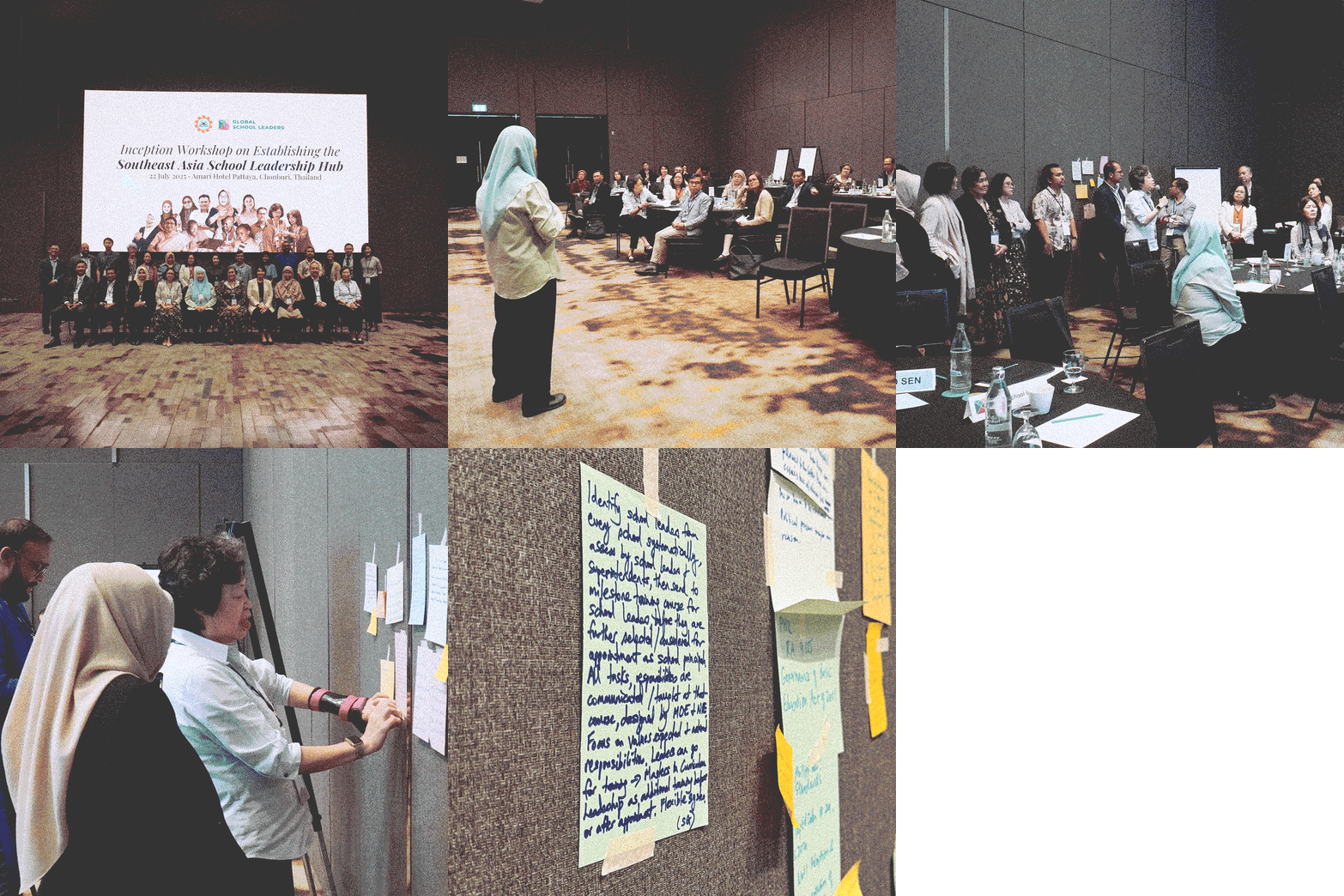
In July 2025, in partnership with the Southeast Asia Ministers of Education Organization (SEAMEO), we established the Southeast Asia School Leadership Hub (SEA Hub), the first regional platform of its kind dedicated to elevating school leadership across Southeast Asia.
The Hub has partners from 11 countries: Brunei, Cambodia, Indonesia, Lao PDR, Malaysia, Myanmar, Philippines, Singapore, Thailand, Timor-Leste, and Vietnam.
As part of the hub’s inception in 2025, with the support from Octava Foundation, we
Mapped initial priorities and aligned expectations with participants
Conducted a series of consultations and interviews with member countries to ensure Hub priorities reflect national policy realities
Presented the draft vision, mission, and strategic direction at the 48th SEAMEO High Officials Meeting.

Latin America and the Caribbean (LAC) Hub Highlights for 2025
Membership expansion: Expansion involved strengthening ties in Argentina, Brazil, Colombia, Mexico, and Peru, engaging new countries like Guatemala, and developing and cultivating potential members and new regional partnerships. The LAC Hub now has seven active members representing Mexico, Colombia, Peru, Chile, Brazil, and Guatemala.
The LAC Hub officially entered Phase 2: Implementation in October 2025, following co-creation efforts in 2024, marked by the appointment of a dedicated strategic support role to guide the initiative and the support from Tinker Foundation.
Work Plan Development: A comprehensive 2026 work plan was created with feedback from LAC hub members.
A major regional event including organizing the Regional Forum Latin America: Back to School. Leading to Transform in collaboration with the GEM Report UNESCO, and OEI.

CREATING SPACES FOR
SCHOOL LEADERS

The School Leadership Network (SLN) Our network remains a vital space for connecting practitioners to global opportunities. This year, the SLN expanded with a new cohort, bringing our direct reach to 800 school leaders worldwide. The group continued to create spaces for principals to share interests and learn from different school contexts, and share tools and practices.
Some highlights of the network this year
SheLeads

Despite women making up the majority of teachers, especially in primary schools, the school leadership field is still largely male-dominated, especially in the Global South. To tap into the proven potential of women school leaders to improve student outcomes, we created a network for women to engage in professional development and support each other, exchanging ideas and resources while building a strong community. In 2025, we conducted our first cohort of She Leads, with 20 participants from 11 countries. Participants engaged in network activities and built connections with one another, and they also conducted specific projects within their schools.
Principals Speak

Now in its third year, Principals Speak has evolved into a vital megaphone for the profession. The platform empowers school leaders to narrate their own realities, sparking a Global South-led conversation that provides policymakers with insights guided by evidence and grounded in empathy. Today, this community has grown to include 900 school leaders across 30 countries.
The Principals Speak Award 2025. To celebrate this growing movement, we launched the Principals Speak Award, focusing this year on Foundational Literacy and Numeracy (FLN). With the UNESCO GEM Report team supporting the process and serving as jurors, we reviewed a competitive pool of 60 shortlisted candidates. We honored four exceptional leaders from Kenya, Indonesia, Argentina, and Malaysia: three selected to represent their respective regions, and one chosen through a global public vote.
Convening the Field
We attempt to use our platform to set the global agenda around school leadership. By creating spaces for shared learning, we ensure that school leadership remains a priority for policymakers and practitioners alike.

“I am convinced that distributed leadership can contribute to more just and democratic societies, as it promotes equitable participation, the recognition of diverse voices, and the building of a culture of shared responsibility. In this sense, the school becomes a space where the foundations of active, inclusive, and supportive citizenship are sown.”

Manuel Urrutia
Principal of Instituto Politécnico María Auxiliadora in Puerto Montt, Chile
“What motivated me to join The School Leadership Network” was knowledge sharing, learning leadership styles, discovering school programs between countries, and networking. I recommended the program to six other Indonesian school leaders because I believe it’s important to extend the benefits of the Network far and wide. The Network has been a gold mine of insights and support.”

Kurnia Dwi Wahyuni
School Leader, Indonesia
Branches
Our offerings
The branches of our work are where theory meets practice. Through direct training and high-level consultancy, we extend our reach to practitioners and systems, offering the shade and structure necessary for schools to thrive.
Training and Consultancy
We approach our research projects from an evidence-based and contextual lens, focused on generating a knowledge repository for the Global South through continuous learning, collaboration, and open sharing of findings to drive systemic change in school leadership.
Level 1
Empowering Practitioners (Training & Support)
Focus: Building capacity on the ground.
Workshops
& Global Engagements
Sparks of Change
In partnership with Firki, we delivered a training session on our Six High-Leverage Actions, equipping educators with immediate, practical frameworks.
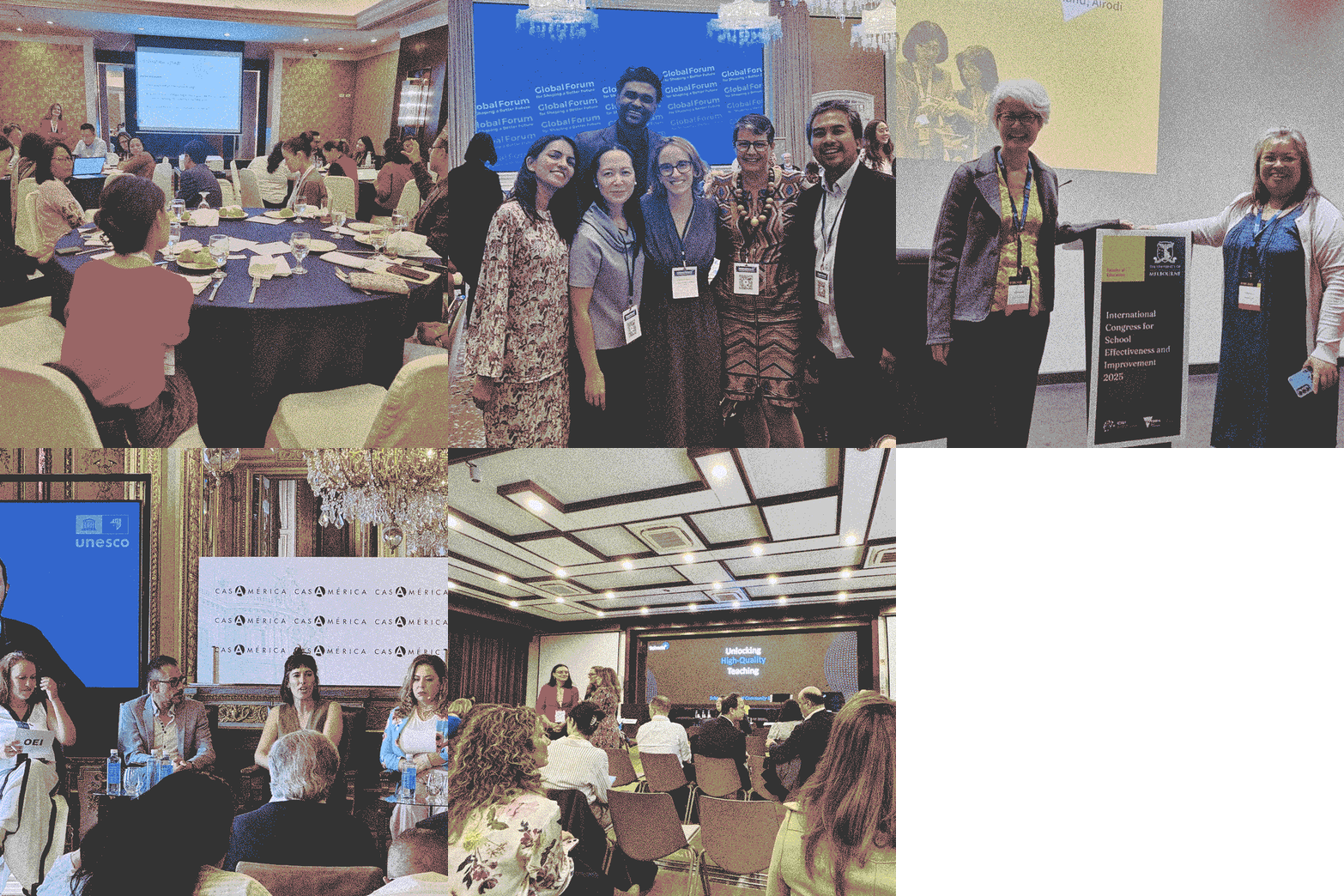
Al for Education conference - Johannesburg, South Africa
We led a workshop for education leaders from civil society, funders, and government on shifting from administrative to instructional leadership.
Education Evidence for Action Conference - Embu, Kenya
We presented our preliminary findings from our work in Sierra Leone on empowering school leaders for sustainable FLN programs using technology.
Al for Education conference - Johannesburg, South Africa
We led a workshop for education leaders from civil society, funders, and government on shifting from administrative to instructional leadership.
Education Evidence for Action Conference - Embu, Kenya
We presented our preliminary findings from our work in Sierra Leone on empowering school leaders for sustainable FLN programs using technology.
SPOTLIGHT
The Leadership Amplifier
The Leadership Amplifier model integrates a school leadership component into existing teacher professional development programs. By integrating programs aimed at teachers and school leaders, we can significantly improve the effectiveness of professional development initiatives and enhance current efforts.
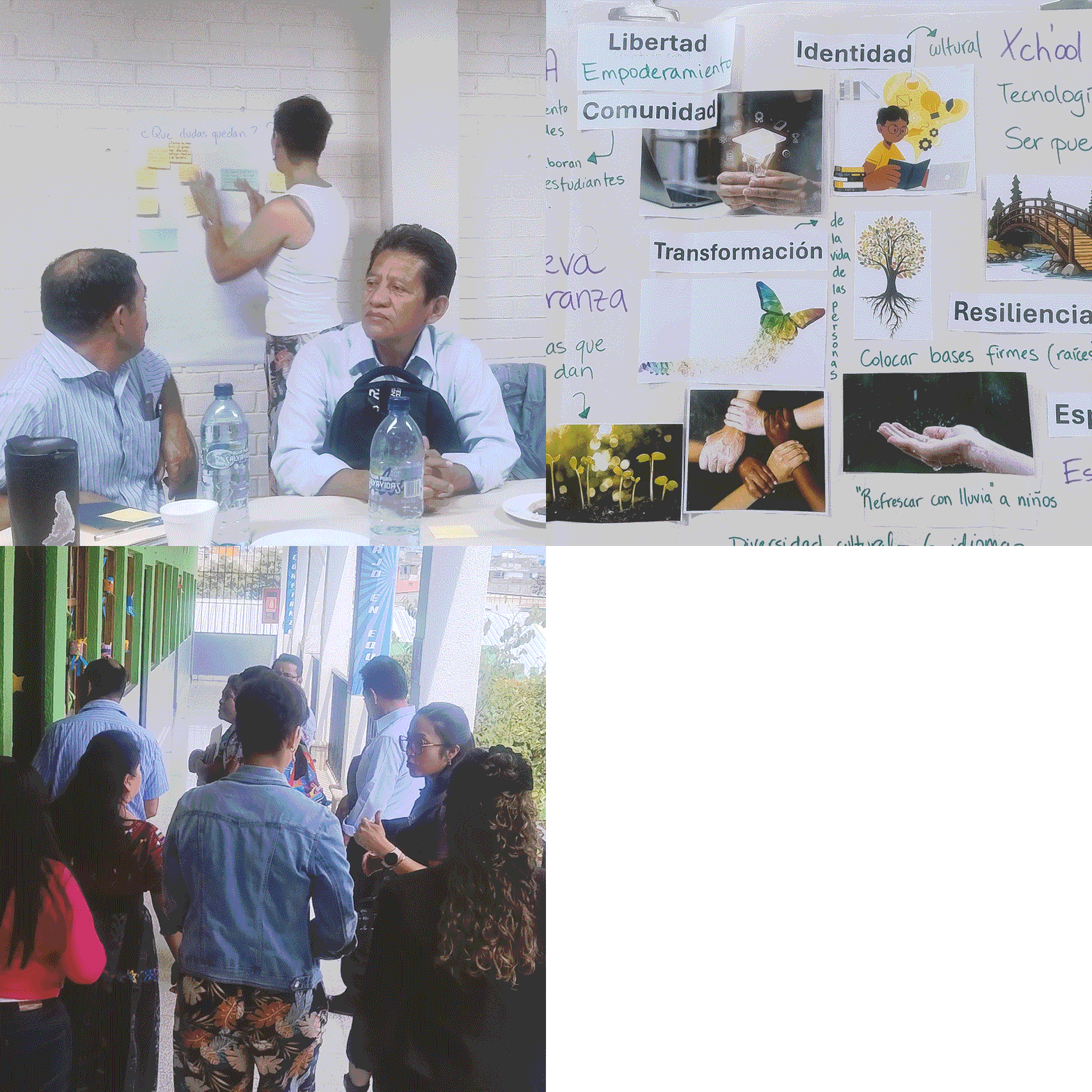
In 2025, we began collaborating with the Luis von Ahn Foundation and five of its grantees in Guatemala to co-design and embed a new leadership component within their existing programs. These organizations already work with teachers across multiple schools, focusing on literacy, mathematics, and socio-emotional learning. Together, we are identifying practical strategies to strengthen their ongoing efforts by ensuring school leaders play a central role in driving implementation, supporting teachers, and sustaining impact.
A core element of this initiative is the community of practice established among all partners. GSL encourages organizations not only to strengthen their individual programs, but also to collaborate, share lessons learned, and address common challenges collectively. This collaborative network fosters peer learning and generates insights that can inform broader education policy and system-level reform.
SPOTLIGHT
Gender-Equitable Schools Alliance (GESL)
This ambitious three-year initiative, supported by Echidna, brings our core pillars together to drive systemic progress toward gender equity.
Launching in Ghana and Kenya, we are partnering with 10 locally grounded organizations to pilot the Alliance model.
These partners will adapt context-specific strategies to elevate inclusive leadership while joining a collaborative community of practice. The ultimate goal is to generate actionable insights that catalyze policy change within their national education ecosystems.
Level 2
Empowering Practitioners (Training & Support)
Focus: Building capacity on the ground.
We provide high-level strategic counsel to governments and NGOs, translating complex data into actionable policies that embed school leadership at the heart of national education systems. Some attempts at this in 2025 with:
The Brazilian Coalition for School Leadership
As the technical partner to a coalition led by the Lemann Center—alongside Instituto Unibanco, Motriz, Todos pela Educação, and Instituto Natura—we are working to ensure every school in Brazil has an excellent leader by 2035. The initiative targets both national policy standards and direct implementation support for 17 state and 143 municipal networks, impacting nearly 40,000 leaders.


Harvest
A successful season of cultivation is measured by its yield. In 2025, the groundwork we laid—tilling the policy soil and nurturing partner roots—produced a harvest of actionable evidence and systemic shifts.We are now seeing tangible results: more empowered leaders, more effective classrooms, and a global community equipped with the tools to sustain this growth into 2026 and beyond.
"For Educando, GSL’s resources are a benchmark at both the regional and global level. Being able to rely on them to align our own content is deeply relevant and valuable to us."
"[Beacuse of GSLs support...] Dignitas was able to create meaningful learning sessions around our gender work building on perspectives drawn from gender and instructional leadership pieces."
Conclusion
The Next Season of Growth
Our 2035 Northstar
We catalyze the school leadership field in the Global South to improve policies and professional learning opportunities for school leaders.
Looking Ahead
The path to the 2035 North Star
2025 was a year of big transitions for us — transitions to a new strategy, transitions towards a deeper focus on systemic change, transitions within our team and organizational structure. It was a year of charting our new path and trying out ways to move forward in this new direction.
In 2026, our direction is even clearer. We are sharpening our focus on what we believe is the most under utilized lever for educational improvement: the school leader. By deepening our commitment to this North Star, we aim to bridge the gap between policy and practice.
_edited.png)
Our strategy for the coming year rests on three pillars:
Scaling Excellence
Ensuring leaders across the Global South have access to high-quality, sustainable professional development.
Systemic Reform
Moving beyond pilot programs to work with partners on implementing policies that institutionalize effective leadership.
Field Building
Cultivating a robust global ecosystem where stakeholders collaborate, share knowledge, and prioritize leadership as a non-negotiable driver of change.

These are some of the initiatives we're pursuing to carry out our new strategy:
Actionable Evidence
We will conduct a comprehensive Evidence Review on Policy, providing governments with the data needed to legislate for better school leadership in Global South.
Resources & Programs
We will continue to work with our partners to build their capacity through various programs, to equip more school leaders.
Coalition Building
We will move the Southeast Asia (SEA) Hub from its foundational phase into full implementation, driving regional collaboration and continue to deepen our work in LAC Hub.
Technical Consultancy
We will continue to guide systemic change in Brazil, advising on national leadership standards, while expanding our technical support to other organizations and systems poised for transformation.
The field is ready, but a harvest requires sustained nourishment.
We invite our partners and funders to continue watering this ecosystem with us, ensuring that the seeds we have planted today grow into a future where every child attends a school led by an empowered, effective leader.
Gardeners
Strengthening Our Internal Ecosystem
To cultivate a global field, we must first ensure our internal ecosystem is resilient, inclusive, and agile. In 2025, Global School Leaders continued to thrive with a lean, high-impact team of 18 members who embody the diversity of the communities we serve.
A Diverse and Inclusive Global Workforce
We expanded our recruitment reach to ensure that the talent guiding our strategy reflects the Global South. For all full-time roles hired in 2025, our qualified candidate pool represented 22 countries in Global South. From this exceptional talent pool, we welcomed three new members, while also maintaining a strong 83% staff retention rate overall.
Global Footprint
Team members reside in 10 countries, spanning every region where we operate.
Linguistic & Cultural Breadth
Our team speaks 11 different native languages and represents 6 different races and ethnicities.
Lived Experience
41% of our staff identify as first-generation college or university graduates, bringing a deep, personal understanding of the transformative power of education.
A Culture of Excellence
Our annual internal survey reflects a team that feels supported and deeply connected to our mission:
100% of team members feel valued for their contributions.
100% report having reliable professional support within the organization.
100% express overall satisfaction with GSL as an employer.
Innovation in Remote, Global Work
As a fully remote, global organization, agility is our competitive advantage. We don't just adapt to change; we lead it. In 2025, we prioritized becoming an AI-forward workplace, transitioning from skeptics to power users. By integrating cutting-edge tools into our daily workflows, we have streamlined our operations and remained at the forefront of global development trends. This commitment to innovation ensures that GSL remains lean, efficient, and ready to meet the evolving challenges of school leadership.
Team & Board
Acknowledgment of the people behind the work

Abraham Okuma
Senior Manager,
Programs

Adhishree Parasnis
Chief of Communications and Advocacy

Aisha Otwoma
Senior Manager,
Research

Animesh Priya
Chief of
Partnerships

Avni Gupta-Kagan
Chief of Strategy
and Operations

Bruno Betat
Director of
Development

Camila Pereira
CEO

Catalina Hepp
Manager,
Growth

Dewi Susanti
Chief of Content and Knowledge

Esmail Bagasrawala
Manager, Communications

Gautam Anand
Director of
Research

Grace McManus
Senior Manager,
Special Projects

Hassan Jamil
Senior Manager,
Special Projects

Ivana Zacarias
Director of
Programs

Madiha Sayani
Senior Manager,
Research

Magdalena Fernandez Lemos
Chief of Growth

Paula Royo
Senior Manager,
Communications

Sanya Sagar
Senior Manager,
Programs

Swarna Surya
Director of Technology
and Innovation

Tamara Philip
Director of
Programs

Tejas Airodi
Senior Manager,
Research


